Track Mats vs Gravel Roads: Which Is Better for Construction Site Access?
Compare the cost, environmental impact, and performance of temporary track mat roads versus traditional gravel access roads for construction sites.
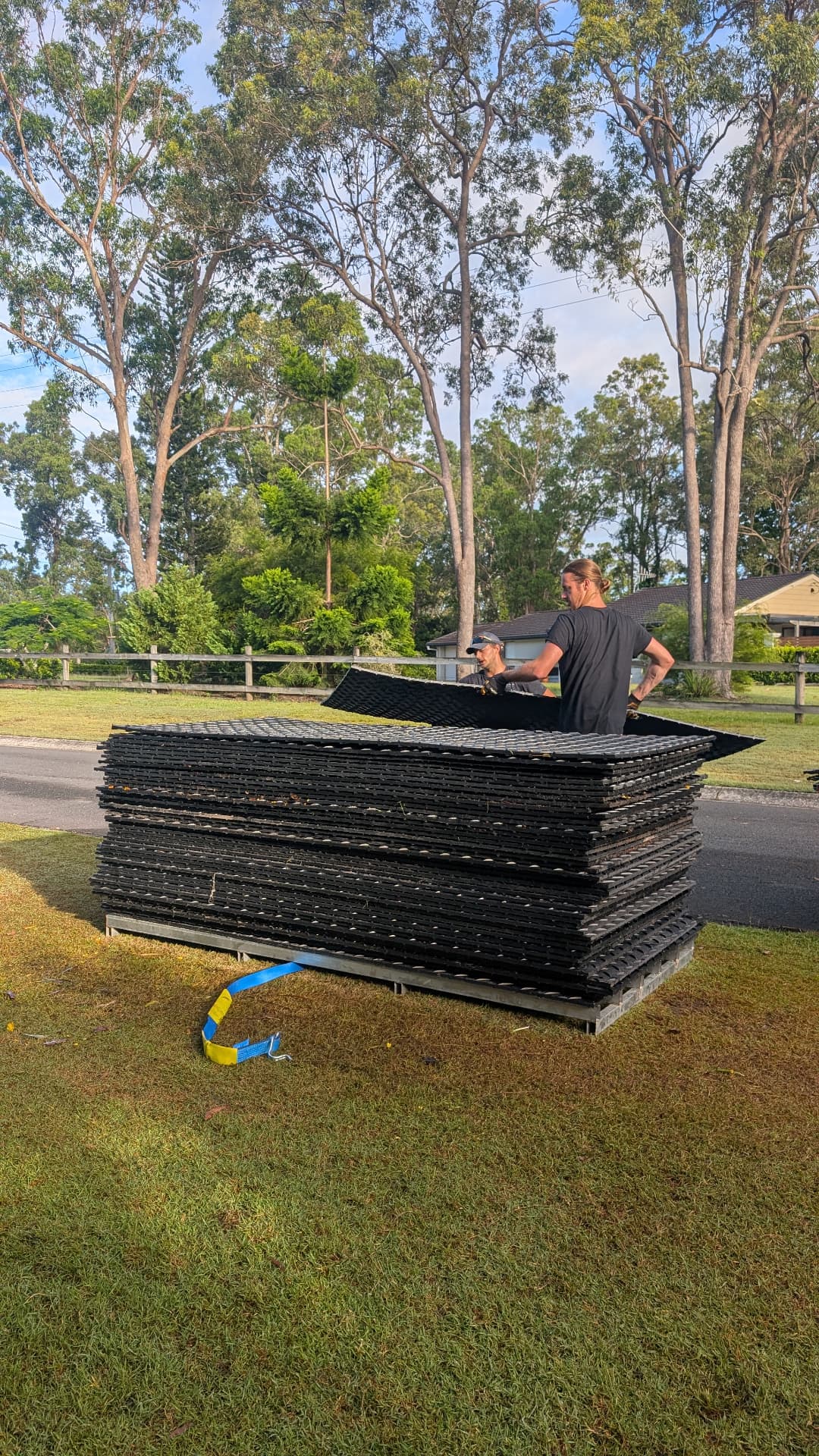
The Access Road Dilemma
Every construction project on soft ground faces the same question: how do you get heavy equipment to the work zone without destroying the site?
The two most common solutions are temporary gravel roads and track mat systems. Both work, but they differ dramatically in cost, environmental impact, and practicality.
Cost Comparison
Gravel roads seem cheaper upfront, but the true cost includes:
- Gravel supply and cartage
- Grading and compaction
- Environmental controls (silt fencing, sediment basins)
- Removal and disposal at project end
- Ground remediation after removal
Track mats operate on a simple weekly hire model:
- $15 per mat per week (excluding GST)
- Delivery and collection included in zone pricing
- No disposal costs
- Zero remediation required
For most projects under 12 weeks, track mats are significantly more cost-effective when you factor in the full lifecycle cost.
Environmental Impact
Track mats leave zero trace. They sit on the surface, distribute loads evenly, and lift off cleanly. There is no gravel to dispose of, no contaminated soil, and no permanent ground disturbance.
Gravel roads, by contrast, mix with topsoil, introduce foreign material, and often require expensive remediation to restore the site.
When to Choose Track Mats
- Projects under 6 months duration
- Environmentally sensitive sites
- Council or heritage land where remediation is required
- Sites where you need to relocate access roads during the project
- Wet conditions where gravel becomes muddy and ineffective
The Bottom Line
For most temporary access requirements in South-East Queensland, track mats deliver better performance at lower total cost with zero environmental impact.